The 80% Your Platform Has Never Really Heard From
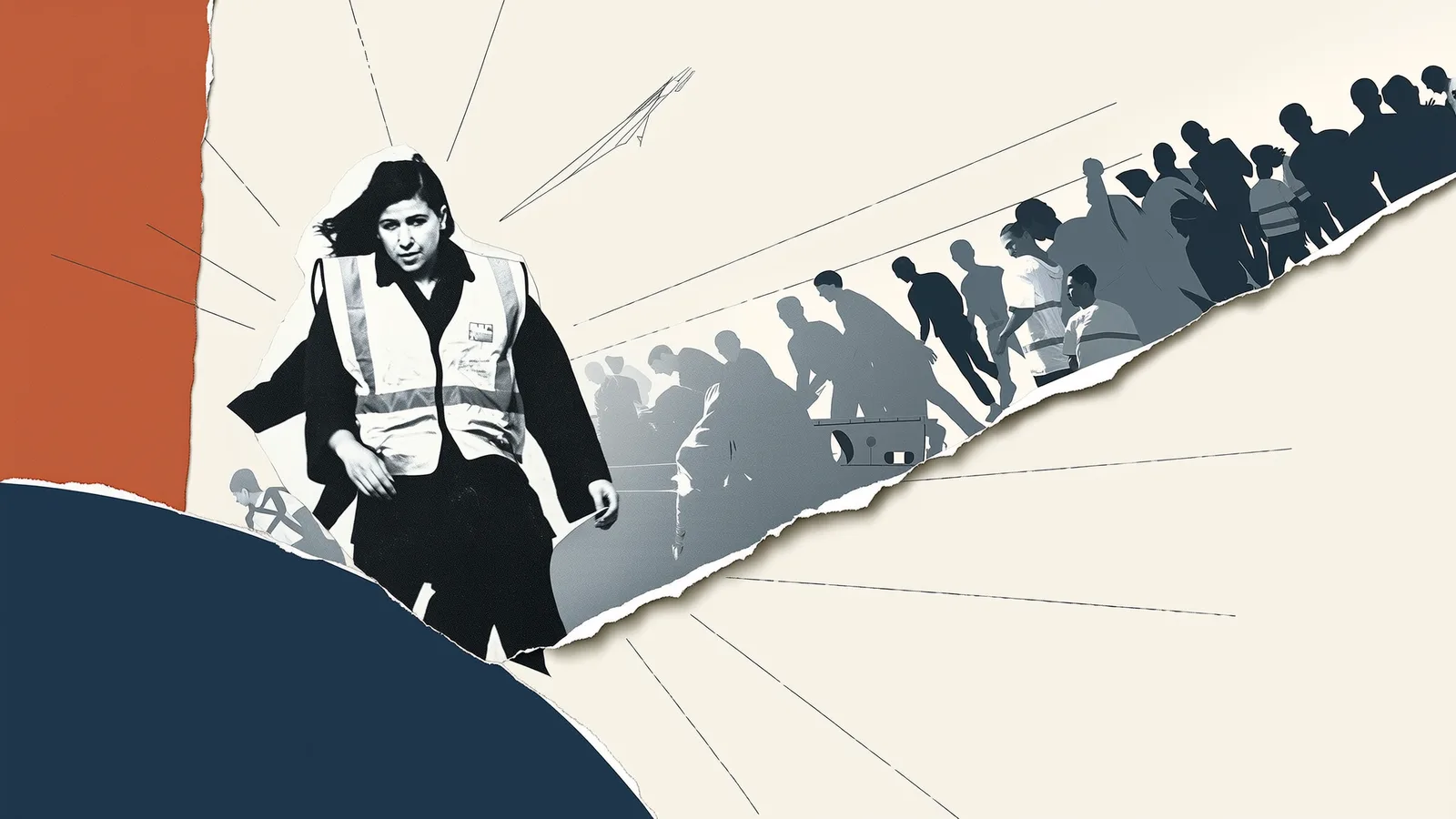
Most workforce listening tools were built for a person with a desk, a laptop, a company email address and twenty quiet minutes to spare. That describes roughly one in five of the global workforce. The other four in five are on their feet, on the road, or on a shift, and a decade of frontline technology has learned how to reach them without ever learning how to hear them. This is not an engagement problem. It is an instrumentation problem, and it means the employees an organisation knows least about are the exact ones running the warehouses, wards, tills and delivery routes the business depends on.
Start with one person. It is 2:40am and a picker in a distribution centre outside Leeds has just finished her fourth hour on the floor. Polish is her first language. She has a personal phone in her locker, a rota app she checks for next week’s hours, and no login she can remember to the engagement portal she has opened twice. Three weeks ago her employer launched a listening survey. It went to email, in English. The results deck will describe her as disengaged. Nobody asked her anything in a medium she could answer.
Who are the 80%?
They are the majority of the global workforce, concentrated in the industries that physically run the world. Deskless workers make up somewhere between 70 and 80 percent of the global workforce, around 2.7 billion people, according to BCG, dominating healthcare, manufacturing, retail, logistics, construction and hospitality. Emergence Capital’s research, which put this population on the technology industry’s map, found that historically only around 1% of enterprise software investment went to tools for them, and that nearly half lacked a corporate email address at all.
Hold those two numbers together for a moment: eighty percent of the workforce, one percent of the software. Then note the past tense, because the more interesting story is what happened next.
Hasn’t the frontline tech wave already fixed this?
No, but it changed the shape of the problem, and any honest account has to say so. Over the past decade, serious money and serious product went at the frontline: workforce management and scheduling platforms, frontline communication apps, task management and store execution tools, mobile microlearning. In retail and hospitality especially, the corporate-email excuse has thinned, because millions of frontline workers now have a company app on their personal phone that shows their shifts, their tasks and their announcements.
Look at what that wave actually built, though. Almost all of it runs in one direction. Schedules pushed down. Tasks pushed down. Checklists, compliance modules, comms, training, pushed down. The return path, where one exists, is a form, a checkbox, a reaction emoji, or a chat thread nobody mines. The frontline stack got very good at telling the floor what to do and confirming it was done. It never learned to ask the floor what it knows and understand the answer. The silent gap this series opened with did not get closed by frontline technology. It moved inside it.
That history also changes the deployment picture, in a way that favours whoever closes the gap. The frontline app wave is not the competition for a listening layer. It is the rail. The rota app the picker already checks, the shift group chat, the task tool on the store tablet: those are exactly the channels a conversation link travels down. The reach problem has largely been solved by a decade of other people’s work. The hearing problem is still open.
Why can’t traditional listening tools reach deskless workers?
Because almost every listening tool ever shipped carries hidden requirements that a frontline job quietly violates: a personal workstation, a monitored inbox, comfort with typing, and a stretch of uninterrupted time. A picker on a two-minute break between totes has none of those. Neither does a driver, a care assistant mid-round, or a line operator whose hands are full.
Think about how a standard engagement survey actually arrives. It lands in a work email. It assumes the recipient checks that email daily. It expects them to click a link on a screen, read a page of Likert items, and type free-text into a box in the corporate language. Every one of those steps is a filter, and the deskless worker fails the filter not through disengagement but through the plain shape of their day.
So the low response rates that operators blame on apathy are often nothing of the kind. The channel excluded them before they had a chance to answer. When you measure a population through a channel it can’t use, silence looks like indifference. It is actually absence, and you built the absence in. That is the instrumentation problem in one line: you cannot draw a conclusion about people you never managed to ask.
What does reaching the 80% actually require?
Reaching the deskless majority requires a conversation that works on a personal phone, in the car park mid-shift, in the employee’s own first language, with no login, no app to install and no typing, and that still returns structured, timestamped data to the system of record. Strip out any one of those and you re-introduce the filter you were trying to remove.
Break it down, because each condition is doing real work:
- A personal phone, not a company device. Most frontline workers don’t carry corporate hardware. If the only way to answer is through issued kit, you’ve excluded the people you most need to hear.
- No login ceremony. A worker who has to remember a portal password, reset it, and wait for an email link will abandon the task. The friction isn’t trivial for this population, it’s disqualifying.
- Their own language, honestly claimed. Head office runs in one language. The night shift often does not. And the honest version of a language claim is a set of languages tested with native speakers under real noise conditions, not the list on the model provider’s brochure. A survey or conversation offered only in the corporate tongue quietly samples the fluent and reports the result as if it represented the whole floor.
- No typing. Thumbs on a phone, in a cold car park, in a second language, is a genuine barrier. Voice removes it. Speaking is the one input mode almost everyone shares regardless of literacy, language or device.
- Structured data back to the system of record. A conversation that stays trapped in a chat thread is a nice gesture and nothing more. It has to come back timestamped and structured so it can be acted on, or it never leaves the anecdote stage.
Here’s the honest part about reach, and it matters. You don’t get to this population by pushing a notification from a system you control, because for most of them there is no such system relationship. You get there by distributing a link through channels the operator already runs: the WhatsApp group the shift already uses, the rota or scheduling app they open to check next week’s hours, a QR code on the break-room wall next to the kettle. The conversation meets them where they already are. It does not demand they come to a system built for someone else’s working day.
The desk-era assumptions and the frontline reality line up like this:
| The listening tool assumes | The frontline reality |
|---|---|
| A corporate email address | Nearly half have none |
| A laptop and a quiet desk | A personal phone in a locker |
| Twenty uninterrupted minutes | Four minutes between tasks |
| The language of head office | The language of the shift |
| A login they use daily | A portal opened twice, password forgotten |
| Typing paragraphs into boxes | Gloves, noise, movement, speech |
| An annual survey window | A moment that matters mid-rota |
Why voice, specifically?
For the deskless workforce, voice is not a nicer version of a text survey. It is the only interface that fits the constraints of the job. Every other input mode assumes something the frontline worker doesn’t have: a keyboard, a stable screen moment, shared written fluency in the company language.
Voice clears all three at once. You can speak while walking to the car. You can answer in the language you think in, whatever head office runs in. You don’t need to read or type. And a spoken answer carries something a tick-box never will: the pace, the hesitation, the point where someone stops to think before they answer. That texture is signal, and text-based tools throw it away by design. Short, mobile-first, low-friction interaction is how this population is reached best across every study of frontline training and communication; a two-minute voice conversation on a break fits that pattern, and a twelve-screen survey emailed on a Tuesday morning does not.
Isn’t this just an engagement problem you can fix with reminders?
No, and the reminder instinct is exactly the reflex that makes the data worse. When response rates sag, the standard move is to push harder: another email, another nudge, another prompt to finish. For a deskless worker that pressure produces the one thing you least want, which is completion without presence.
This is where the deskless gap meets the quality problem. An employee answering on autopilot to make the notification go away and an employee answering with full attention produce identical transcripts. The screen advanced either way. The completion counter ticked up either way. And most platforms in this category are structurally blind to the difference, which means the dataset looks cleanest at the precise moment it is most contaminated. Push a tired worker at the end of a double shift hard enough and you will get your completion rate. You will not get anything true. BCG’s frontline research puts numbers on where that ends: disengaged frontline populations show higher absenteeism, more defects, more safety incidents and markedly higher turnover, and a flattering dashboard changes none of it.
The better response is the opposite of pushing. When engagement drops, an adaptive conversation slows down, shortens its questions, and gives the person room, or lets them stop and come back. That is the difference between chasing a number and protecting a signal. The deskless majority isn’t under-engaged because you haven’t asked often enough. They’re under-heard because you asked in a way they couldn’t answer, then read their absence as consent to the status quo.
What this does not fix
Three honest limits. First, reach is not trust. The first campaign a frontline population receives determines whether there is a second, and a workforce that answers honestly and sees nothing change will not answer again; the channel is the easy half, acting on it is the half that decides. Second, voice-first is not voice-only. Some employees will prefer to type, some environments are too loud even for good noise handling, and some workers have no smartphone at all, which is what shared kiosk links and printed QR codes are for. Third, in much of Europe this population is exactly where works councils and consultation obligations live, so programme design belongs in front of employee representatives before launch, not after, and the evidence standards this series has argued for elsewhere, disclosure on record, nothing inferred that should not be, are what make that conversation winnable.
What this means if you own the listening programme
If your dashboards look healthy but you can’t remember the last time a warehouse or a night shift genuinely surprised you, treat that as a warning, not a reassurance. Here’s where to start.
- Segment your response data by role, not just by region. Pull completion rates for deskless roles separately from desk-based ones. A blended average almost always flatters you by hiding the population you’re missing.
- Audit the channel before you audit the sentiment. Ask how a frontline worker would physically receive and complete your current survey on a normal shift. If the honest answer involves a work email and a laptop, you’ve found the problem.
- Distribute through channels they already open. Rota apps, existing shift group chats, and printed QR codes reach people that corporate email never will. The frontline app wave built these rails; use them.
- Add a first-language option that isn’t a translation afterthought. If the shift floor runs in three languages and your survey runs in one, you are systematically sampling the fluent and calling it the whole.
- Stop treating a high completion rate as proof of anything. Ask what conditions the answers were given under. A response given to dismiss a prompt is worth less than no response, because it tells you nothing while looking like it tells you something.
The version for the operations buyer
HR owns the engagement survey, but the strongest case for hearing the 80% belongs to operations. The signal that lives on the floor is operational signal: the near-miss nobody wrote up, the workaround that became the process, the equipment fault reported to a supervisor and lost, the onboarding gap that shows up as week-three attrition. Frontline turnover is the single most expensive recurring line in most deskless-heavy businesses, and the reasons walk out of the door unrecorded. A voice channel that reaches every worker, in their language, on their phone, in the flow of the shift, is not an HR wellness initiative. It is operational telemetry from the only sensors that were never wired in: the people.
The workforce was never silent. The infrastructure was never listening. The 80% have been talking the whole time, in break rooms, in group chats, at handover, in languages the survey never spoke. A decade of frontline technology proved they can be reached. The open question, and the open market, is whether they can finally be heard.
Frequently asked questions
What counts as a deskless worker?
A deskless worker is anyone whose job doesn’t put them at a desk with a computer for most of the day: retail staff, nurses, drivers, warehouse and factory workers, care assistants, field technicians and hospitality crews. They account for roughly 70 to 80 percent of the global workforce, and they’re consistently the group traditional listening tools reach least well.
Haven’t frontline apps already solved this?
They solved distribution, not listening. The frontline tech wave of the past decade, scheduling, communication, task management, microlearning, built excellent one-way rails to the floor, and thinned the old corporate-email excuse. But its return paths are forms, checkboxes and chat threads, none of which produce structured, quality-checked signal at depth. Those apps are the channels a real conversation now travels down, not a substitute for one.
How do you handle many languages honestly?
By distinguishing supported from verified. The honest claim is a set of languages where conversation quality, turn-taking, and the AI disclosure itself have been tested with native speakers under real noise conditions, expanding as verification expands. A forty-language dropdown with three tested languages behind it is a compliance and quality risk wearing a feature’s clothes.
What about workers without smartphones?
Smartphone penetration among frontline workers is high but not universal, and a serious programme designs for the gap: shared devices at shift handover, kiosk links in the break room, QR codes that open a browser session with no install. The design principle is the same throughout: zero new accounts, zero new apps, zero typing required.
Doesn’t a higher completion rate mean better data?
No. A completion tells you the screen advanced, not that a person was present or paying attention. An answer given on autopilot to clear a notification and a considered answer look identical in the transcript. Chasing completion, especially by nudging tired frontline staff, tends to produce more responses and less truth.
Sources
- Facing the Deskless Labor Shortage with Technology, Boston Consulting Group, on the 2.7 billion deskless population, the communication gap, and the engagement cost data.
- The State of Technology for Deskless Workers, Emergence Capital, on the 80% figure, the historic 1% of enterprise software investment, and corporate email access among deskless workers.
- The Deskless Workforce: A Massive Opportunity, VentureBeat / Emergence Capital, on the industry distribution of the 2.7 billion.
Researched with AI. Argued, verified, and signed off by humans. That’s also how we think AI should work everywhere.
Give every employee a voice
Tadeus holds real voice conversations with your whole workforce at once and returns structured records to the systems you already use.
Start for free